Same-Day Flower Delivery Explained: Cut-Off Times, Postcodes and What to Expect
October 09, 2026 - Delivery
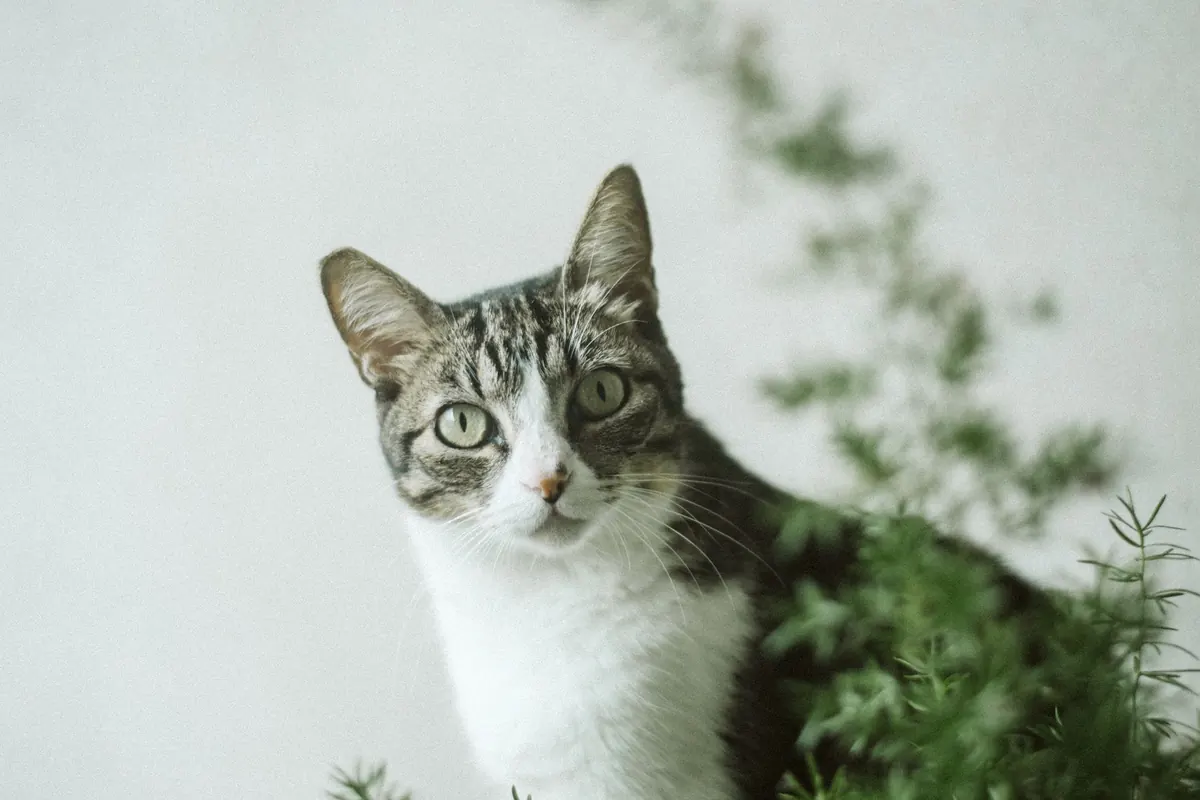
A trailing pothos on a high shelf, a peace lily beside the sofa, a rubber plant in the hallway — if you share your home with a cat or dog, each of those choices deserves a second look. Cats are the usual culprits, and many will chew a leaf out of curiosity or plain boredom. Dogs investigate with their mouths too, and puppies will try almost anything once. You don't have to pick between plants and pets, though. You just have to choose the right plants, and put them somewhere paws can't reach.
Start with the botanical name. Common names will trip you up constantly — a "money plant" might be a harmless Pachira aquatica or a trailing pothos, and only one of those belongs within reach of a cat. If a label on the pot says Epipremnum aureum, you have your answer in a way that "devil's ivy" will never give you.
Next, remember that non-toxic is not the same as edible. A cat that eats half a spider plant may still be sick on the carpet, simply because that is a lot of fibrous greenery for a small stomach. Any sudden change in diet — chewed leaves included — can cause a bout of vomiting or loose stools.
Finally, think about what is on the leaves. New plants arrive carrying whatever the grower or shop used on them. Wipe the foliage with a damp cloth, and keep the plant out of reach for a week or so before you move it anywhere your pet likes to nap.
When you want a definitive answer, the ASPCA keeps a searchable list of plants and their toxicity to cats, dogs and horses. It is far more reliable than a forum thread, and it is quick to check by botanical name.
These are all widely available, and all listed as non-toxic to cats and dogs. They will still need the right light and watering, so match the plant to the spot rather than the other way round.
Some of the most popular houseplants are the ones that cause the most trouble. This is not a "throw everything away" list, but it is a "know where they are" list.
Cats move upwards. A shelf, a wall bracket, a hanging macramé holder or a tall plant stand will do more for plant survival than any spray or deterrent. Watch where your cat already likes to sit — the windowsill, the back of the sofa, the top of a bookcase — and treat those as no-plant zones. If a pot can be knocked off a ledge, assume it eventually will be.
Large pebbles or chunky gravel on top of the compost discourage digging, and they look smart while they do it. Group plants tightly in one corner rather than dotting them around the room, so there is a single area to guard rather than six. Keep plant food, bulbs and any rooting powder in a closed cupboard.
A pot of cat grass — wheatgrass or oat grass — costs very little and redirects most leaf-nibbling within a week. Offer it fresh and replace it when it looks tired. Avoid essential oil deterrents entirely; many, citrus and eucalyptus in particular, are harmful to cats rather than simply unpleasant.
Move the plant out of the way, check the mouth for any remaining material, and take a photo of the plant plus its label. Do not try to make your pet sick. Note the time and watch for drooling, pawing at the mouth, vomiting, diarrhoea, wobbliness or unusual tiredness, and ring your vet for advice rather than waiting to see how things go. If a cat may have come into contact with a lily, treat it as urgent and call straight away.
This is general guidance, not veterinary advice. Your vet knows your animal, your plant and the full picture, and a quick phone call is always cheaper than a worried night.
Start with two or three of the safe plants above, put them where your pet already does not go, and add a pot of cat grass as a decoy. Check botanical names before you buy, wipe new foliage down, and keep the troublesome plants — lilies especially — out of the house rather than merely out of reach. Done that way, greenery and animals coexist quite happily, and your windowsill stays full.
Photo: Alice Castro / Pexels

How same-day flower delivery works across UK cities, from cut-off times and postcode limits to courier routes and...

Ward rules, delivery windows and sensible packaging decide whether a hospital bouquet reaches the bedside. Here's...
Copyright © 2026 Petal Bay. All Right Reserved.